



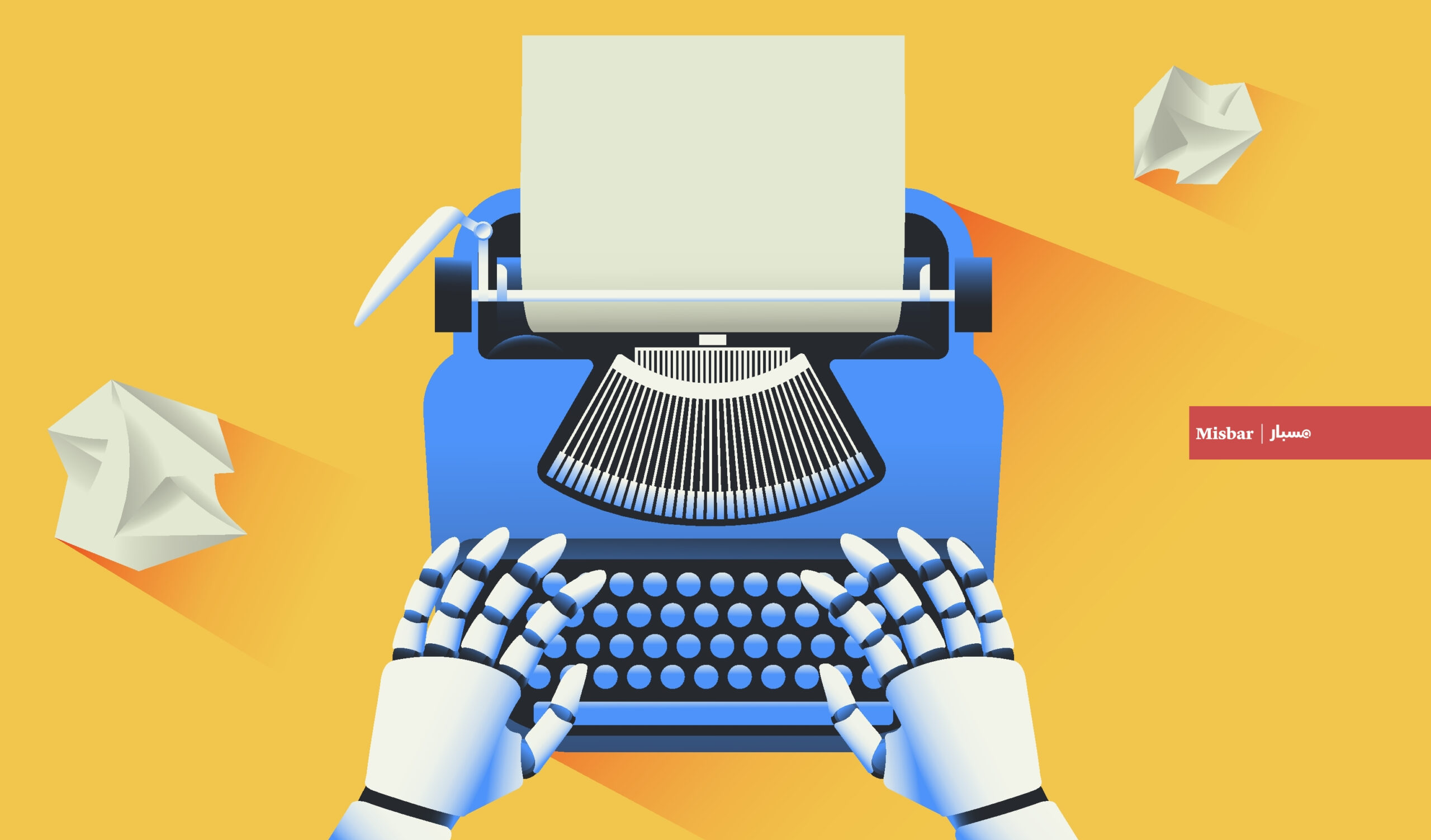
Since ChatGpt arrived in November 2022 and a wave of other AI-powered tools followed, artificial intelligence has flooded almost every corner of everyday life, from everyday tasks to complex, specialized tasks. AI is now helping humans with everything from rapid searching to advanced data cleaning and analysis, photo generation, translation, editing, and email writing.
Of its many uses, content generation is one of the most transformative, yet most controversial applications of AI. Generating AI unlocks new possibilities and wide range of creative possibilities. However, it also raised serious questions about accuracy, ethics and the spread of misinformation.
Who owns the copyright to the content generated by AI?
New urgent concerns are emerging in today’s creative industry: copyright. This is not just a legal issue, it is also an ethical dilemma. At the heart of it is simple yet serious questions. Who owns copyright to content generated by artificial intelligence?
It is important to note that copyright debates far exceed ownership of content generated by artificial intelligence. It also extends to copyrighted materials used to train artificial intelligence systems and generate new content. This raises the second important question. How legal is it to use someone else’s creative work to train an artificial intelligence system or create a new job?
Developers of artificial intelligence technology routinely collect and process huge datasets, often including copyrighted materials without consent.
This can infringe and erode the creator’s rights. The use of such materials has sparked concerns about the decline in value and originality of human-created content. From poetry and prose to paintings and videos, to music videos that mimic human voices, movements and styles, the debate intensified as a creation produced by artificial intelligence that spreads across the Internet.
Based on detailed and specific prompts, generative artificial intelligence can generate seemingly original content, such as text, images, audio, and video. However, these works are not spontaneous and do not come out of nowhere. These are the results of algorithms trained on large datasets. Through this training, artificial intelligence systems will learn to generate predictions and connect prompts to previously processed content and information.
As a result, generative artificial intelligence produces what is well described as “original” content tailored to the user’s instructions. The quality and nature of its output will depend heavily on the data used during training. The better and more extensive the dataset, the more persuasive the results tend to be.
Given this, if the content was generated by a system trained with copyrighted material, the resulting output could infringe those rights without the consent of the original rights holder.
AI-generated content and human creativity
Amid a debate on artificial intelligence and copyright, the European Union has advanced its AI law, which is expected to be fully effective in 2026. The legislation represents one of the most ambitious efforts to set boundaries between AI development and use.
Generally, ownership of content is based on originality. This means that the content must be the result of the author’s own intellectual work to qualify for intellectual property rights, rather than a copy of existing work or a merger of existing content.
Ownership of content generated by AI depends on several factors, including the laws of the jurisdiction that governs AI and the creation of content, the respective roles that users play and what AI plays in creating work, and intellectual property terms in the service provider’s terms of use.
Depending on these factors, copyright can be attributed to the fact that the creator, user, or, in many cases, no one has at all. This means that the work is not protected by copyright. But ethically, many researchers advocate for transparency and clearly articulate whether content was created by AI.
Confronting the ownership of AI-generated content, Dr. Ali Arjdal, a political science and constitutional expert, refers to current European law (Directive 2001/29/EC and Directive 2019/790/EC). He also emphasizes the case law of European Union judges who say copyright protection requires copyright protection to be “an original work by an author resulting from human intellectual creation.”
For Arjdal, if the work is fully produced by artificial intelligence without creative human input, it is not qualified for copyright protection in the European Union, as there is nothing known as the “creative human imprint.”
According to Arjdal, the person who made that contribution is considered a legal author and may grant copyright, if there is considerable human involvement, such as planning, editing, or prompting. This is Thalerv. It is in line with the United States position, based on Perlmutter (2023) and the 1988 copyright, Designs and Patents Act. In particular, the author is attributed to the person who “made the arrangements necessary to create” the work.
Training Generated AI Models
The European Union’s artificial intelligence law does not concern copyright issues, but it mentions the following about copyright:
Recital 105: Reaffirm the importance of copyright exceptions in data mining. This was introduced under another directive that research and cultural heritage institutions could replicate and extract work for scientific purposes. Recital 107: Requires providers of the Generated AI Model to publish a comprehensive summary of the content used in training, allowing copyright owners and other parties to provide legitimate interests, identify works, and enforce rights under EU law.

As Ali Arjdal points out, the law governing the use of copyrighted materials to train AI is not clear. In Europe, the law makes room for large-scale text and data mining, but there are limitations. The research institution has a wide latitude under Article 3 of Directive 2019/790, but commercial players are bound by Article 4, allowing the creator to block the use of the work via technical signals.
“Broadcasting the Atlantic, discussions take place under American “fair use” standards. This is an elasticity test that if you truly change the original material and leave it in the market, it will cover AI training. ”
From a legal and ethical perspective, ARJDAL said the use of protected content in AI training can only be justified if two conditions are met.
According to Arjdal, preserving human authors should remain the cornerstone of the system. Work generated without the creativity of real human beings must remain in the public domain, and companies must disclose their training datasets to creators so that they can protect their rights.
“The legality of training AI models for protected works is only accepted within the limitations of text and data mining exceptions. Without these safeguards there is a risk that allows for cultural and intellectual appropriation of new digital forms.”
With regard to Arab countries, the risk of generative AI copyrights does not appear to be a priority or broad concern yet. But they are already at our gateway. Without excelling in producing these models, we continue to navigate AI models and their possibilities, so we need to think long term. Without smart, future-looking rules, artists, writers and musicians could see their work being scooped up, remade and not on sale.
You can protect your creativity by setting clear rules on how to use generative AI models and how to own AI-generated content, employing good practices from the global model, and ensuring that text and data mining are strictly regulated in a simple way that allows creators to opt out. While AI can help reduce repetitive tasks and optimize work, it is important to maintain a human touch at the heart of creativity, and integrity is required when AI is involved.
read more
AI Echo Chamber: How Composite Content Distorts the Truth Online
Understanding teenagers and online misinformation

