


By combining artificial intelligence and Chinese laboratory research, Insilico Medicine has reduced the time needed to produce some drug candidates to about a year, according to CEO Alex Zhavoronkov.
Zaboronkov said the Hong Kong-listed company’s fastest program reached nomination in nine months, compared to the usual timeline of about 13 months. He said traditional approaches typically take about four-and-a-half years to reach the same stage.
This timeline covers early discovery and candidate selection, rather than the entire process of bringing a drug to market. Clinical trials, manufacturing, and regulatory review remain separate stages.
AI speeds up candidate selection
Insilico uses generative AI to identify biological targets, design potential drug molecules, and evaluate which compounds advance to clinical testing.
The company says its programs typically recommend preclinical candidates within 12 to 18 months after researchers have synthesized and tested 60 to 200 molecules. Its workflow combines AI-generated designs with researcher review and experimental validation.
Laboratory experiments are still required to confirm the biological activity and drug properties of the compounds selected by the model. Insilico said the AI-powered process allows the team to arrive at a candidate nomination after testing a smaller set of synthetic molecules, although direct comparisons with comparable programs developed using AI are not possible.
Insilico said it has generated 31 preclinical candidates since 2021. According to the company’s pipeline disclosure, 13 programs have received investigational new drug approval, allowing them to proceed to human studies.
The company conducts AI research in Montreal and Abu Dhabi, but much of its experimental validation and laboratory scale-up work is done in China. The company’s Shanghai facility has some automated biological sampling and compound screening.
A team outside China will develop and evaluate the company’s AI models, and researchers in Shanghai will handle biological testing, screening, and scale-up.
Zaboronkov pointed to China’s research infrastructure, operational costs and regulatory environment as partly to blame for the shorter development cycles. He said pharmaceutical companies with research labs in China can shave about two years off traditional candidate development timelines.
China has expanded beyond producing generic drug ingredients and is now playing a larger role in the development of new drugs. International pharmaceutical companies also collaborate with Chinese laboratories, contract research organizations, clinical trial centers and biotechnology companies.
Pfizer executives said clinical development in China can be done three times faster and at about half the cost than comparable work in Europe. According to Reuters, it typically takes five to seven years for a new drug candidate to reach the Chinese market, compared to at least eight to 10 years in Western markets.
In 2025, China introduced a 30-working day review pathway for eligible Class I innovative drug clinical trial applications. Applications that require expert consultation or involve complex technical issues may be moved to a 60 business day review period.
“We are currently competing with Chinese pharmaceutical companies on schedule and with traditional Western biotech companies on novelty,” Zaboronkov said.
Insilico has research and development agreements with pharmaceutical companies including Eli Lilly and Japan’s Takeda Pharmaceuticals.
The company and Taiwan-based Bora Pharmaceuticals also announced a proposed strategic partnership that could exceed $2.5 billion once a definitive agreement is signed and the collaboration is fully implemented.
Although Insilico operates research facilities in China, Zaboronkov said more than 90% of its revenue comes from Western drug companies. He declined to say how much revenue the company makes in China.
Zhaboronkov said a Western licensing deal would be more advantageous for Insilico because China’s national insurance system has low reimbursement rates for novel drugs.
The company also restricts the sale of most of its software within China due to geopolitical concerns, Zaboronkov said. The company plans to expand its research activities in Shanghai.
RentSearchive moves toward Phase III trial
Insilico announced and enrolled a Phase III study of lentsertib in July 2026. The oral drug is being studied in idiopathic pulmonary fibrosis, a disease that causes progressive scarring of the lungs.
The company used AI to identify the drug’s biological target and generate and optimize its molecular structure.
The Phase 3 trial is designed to enroll 320 participants across 47 sites in China. The trial will compare lentsertib with a placebo over 52 weeks, with the primary endpoint being the annual rate of decline in forced vital capacity, a standard measure of lung function.
When ClinicalTrials.gov records were updated on July 7, the trial was listed as not yet recruiting. Registration began in August 2026, with initial completion scheduled for October 2029.
RentSearchive previously completed a small Phase IIa trial. Phase III trials test a treatment on a larger group of patients over a longer period of time.
Nominating a candidate remains an early milestone in development. Before a drug is approved for sale, it must complete preclinical studies, human trials, manufacturing validation, and regulatory review.
Industry data does not establish whether AI-designed drugs are more likely to succeed in late-stage trials.
A 2024 analysis of AI-native biotech pipelines reported Phase I success rates of 80% to 90%. The same study found a Phase II success rate of about 40%, which is in line with historical industry comparisons used by the researchers.
The researchers said the number of phase II programs is too small to determine whether AI improves late-stage clinical success. This analysis was based on publicly reported pipelines and did not compare otherwise identical AI-assisted and traditional drug programs.
Insilico announced that it has produced 31 preclinical drug candidates and secured 13 investigational new drug approvals. RentSearchib is the first program to reach Phase III, but none of the company’s experimental drugs have received commercial approval.
Automation will change the role of biotechnology
AI and experimental robotics are also changing staffing requirements within Insilico.
Zaboronkov estimated that the company could automate or lay off about 40% of its software-side employees. He did not explain the numbers as announced layoffs or apply them to the biotech industry as a whole.
Insilico has approximately 400 employees. Zaboronkov said the lab’s scientists and software engineers are being retrained to manage AI evaluation systems, automation equipment and robotics.
He said the retraining will focus on AI benchmarking and robotic systems as the company automates more research and software functions.
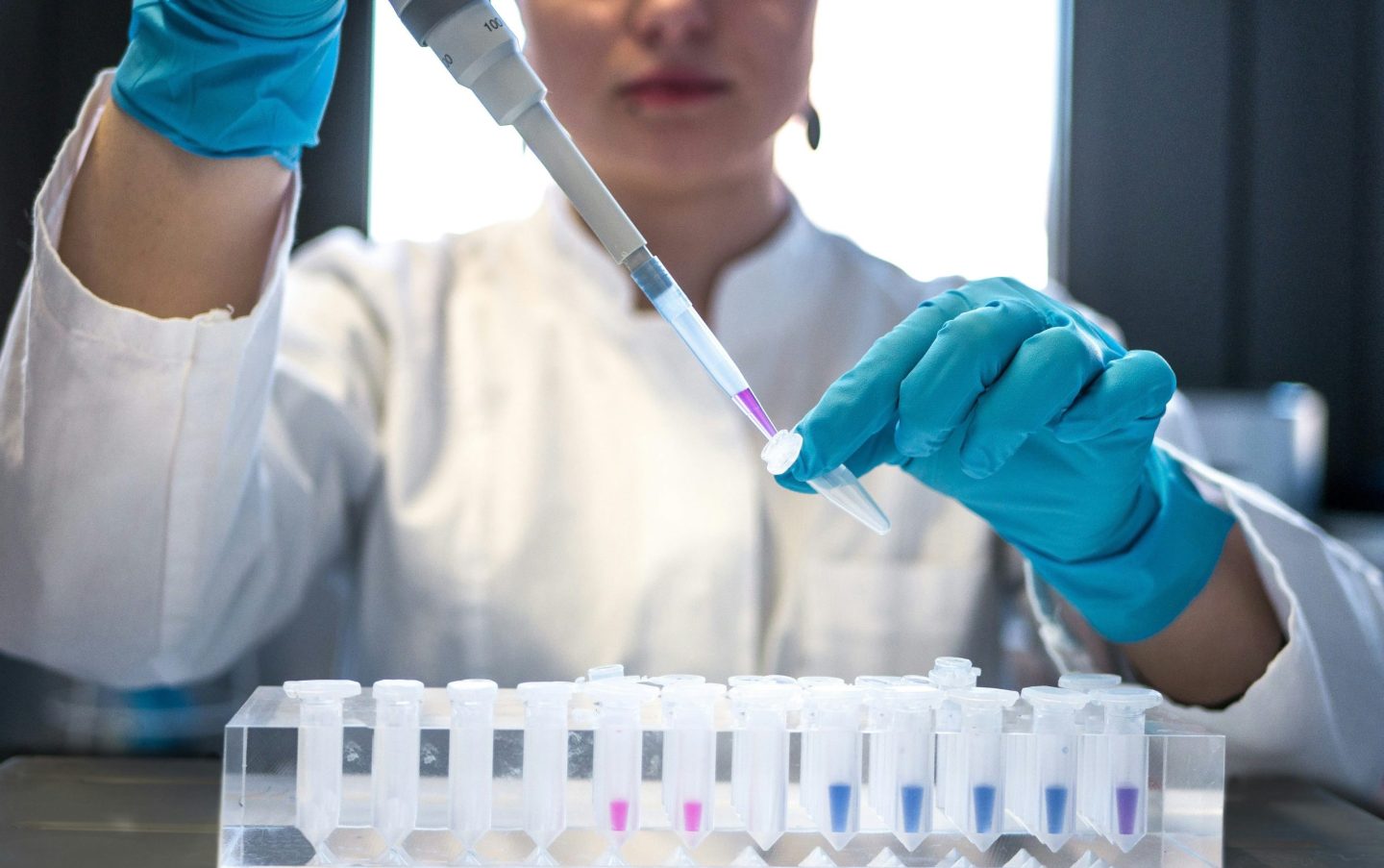
(Photo courtesy of Julia Koblitz)
See also: Bristol-Myers Squibb buys Nvidia AI systems for drug discovery
Want to learn more about AI and big data from industry leaders? Check out the AI
AI News is brought to you by TechForge Media. Learn about other upcoming enterprise technology events and webinars.


