



Every major economy faces the same problem today. Artificial intelligence is consuming power at a pace the power grid was never designed to handle. In the United States, the market price of capacity for PJM, the nation’s largest power transmission operator, has increased more than 10 times in two years, with data center growth being a major factor. In Europe, utilities are scrambling to upgrade their transmission infrastructure fast enough to keep up with hyperscaler demands.
The International Energy Agency (IEA) predicts that global data center electricity consumption could approach 1,000 TWh by the end of this decade. Although renewable energy is largely present, most countries still lack the ability to coordinate renewable energy through national-scale AI energy grid mapping. But China just built it.
A study published this week in Nature by researchers at Peking University and Alibaba Group’s DAMO Academy has produced something no country has been able to manage before. It is a complete, high-resolution, AI-generated inventory of wind and solar infrastructure across the nation, with an analytical framework to orchestrate it as an integrated system.
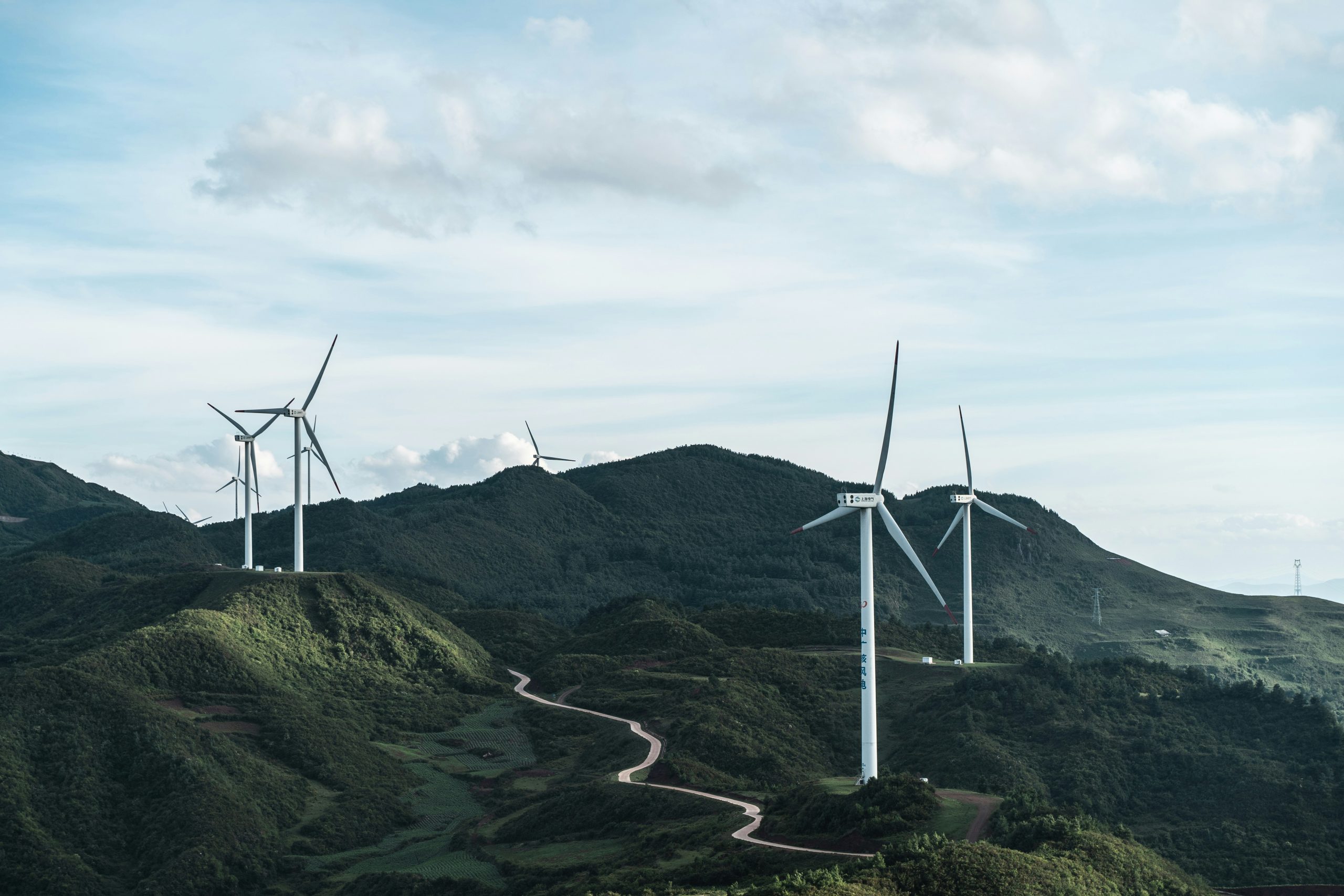
Using a deep learning model trained on submeter satellite imagery, the research team processed 7.56 terabytes of images to identify 319,972 solar farms and 91,609 wind turbines in China.
AI energy grid mapping
Previous research on solar wind and wind complementarity, the idea that the two sources can offset each other’s variations in time and geography, has relied primarily on hypothetical or modeled deployment scenarios. How complementarity manifests under real-world infrastructures and how it shapes system-level integration outcomes has remained unclear until now.
The researchers showed that solar-wind complementarity significantly reduces the variability of electricity generation, and the effect increases as the geographic range of the combination increases.
In fact, the further apart the facilities being adjusted, the more likely the balance will be achieved. For example, when clouds cover a solar power plant in Gansu province, the wind path in Inner Mongolia does not darken. The findings point to the structural inefficiency of China’s current way of managing its power grid, with coordination occurring at the local rather than national level.
The researchers argue that a move to a unified national scale would make it easier to combine complementary energy sources, stabilize the grid and avoid wasteful curtailment of generated renewable power, which has long been one of China’s costliest clean energy challenges.
Professor Liu Yu of Peking University’s School of Earth and Space Sciences explained that the inventory would allow China to view its new energy landscape from “God’s eyes,” a term that has more operational significance than initially suggested. Until now, grid operators cannot optimize what they are not aware of.
China is in the midst of an AI-driven surge in electricity demand, straining the power grid. Due to the rapid proliferation of data services and large-scale computing equipment, electricity consumption in the sector increased by 44% year-on-year in the first quarter of 2026, reaching 22.9 billion kilowatt-hours, according to the China Electricity Commission.
This is an unusual growth rate for a sector that was already in high demand. This is accelerating data center expansion in China’s northern and western provinces, where land is cheaper, wind and solar resources are more available, and electricity prices are correspondingly lower. The states targeted for new data centers are the same regions where solar wind complementarity is highest.
behind the model
The technical achievement behind this is worth understanding in its own right. DAMO’s deep learning models were trained to identify solar power facilities and wind turbines from submeter-resolution satellite images, but this task is complicated by the wide variety of installation types, terrain conditions, and image quality.
The resulting dataset covers facilities in 1,915 counties in China, ranging from rooftop panels in coastal cities to utility-scale wind farms on the Mongolian Plateau. Processing 7.56 terabytes of imagery to create a nationally consistent county-level inventory demonstrates what large-scale geospatial AI can do when applied to infrastructure problems, and is a template that could, in principle, be replicated in other countries.
China’s clean energy sector generated an estimated 15.4 trillion yuan (US$2.26 trillion) of economic output last year, equivalent to Brazil’s entire GDP, according to the Finland-based Energy and Clean Air Research Center. Managing an asset base of this size without national visibility tools has always been a limiting factor, but that limitation is no longer there.
The study dataset and code are publicly available via Zenodo.
(Photo provided by Luo Lei)
See also: Inside China’s push to apply AI to its energy system
Want to learn more about AI and big data from industry leaders? Check out the AI & Big Data Expos in Amsterdam, California, and London. This comprehensive event is part of TechEx and co-located with other major technology events. Click here for more information.
AI News is brought to you by TechForge Media. Learn about other upcoming enterprise technology events and webinars.

