



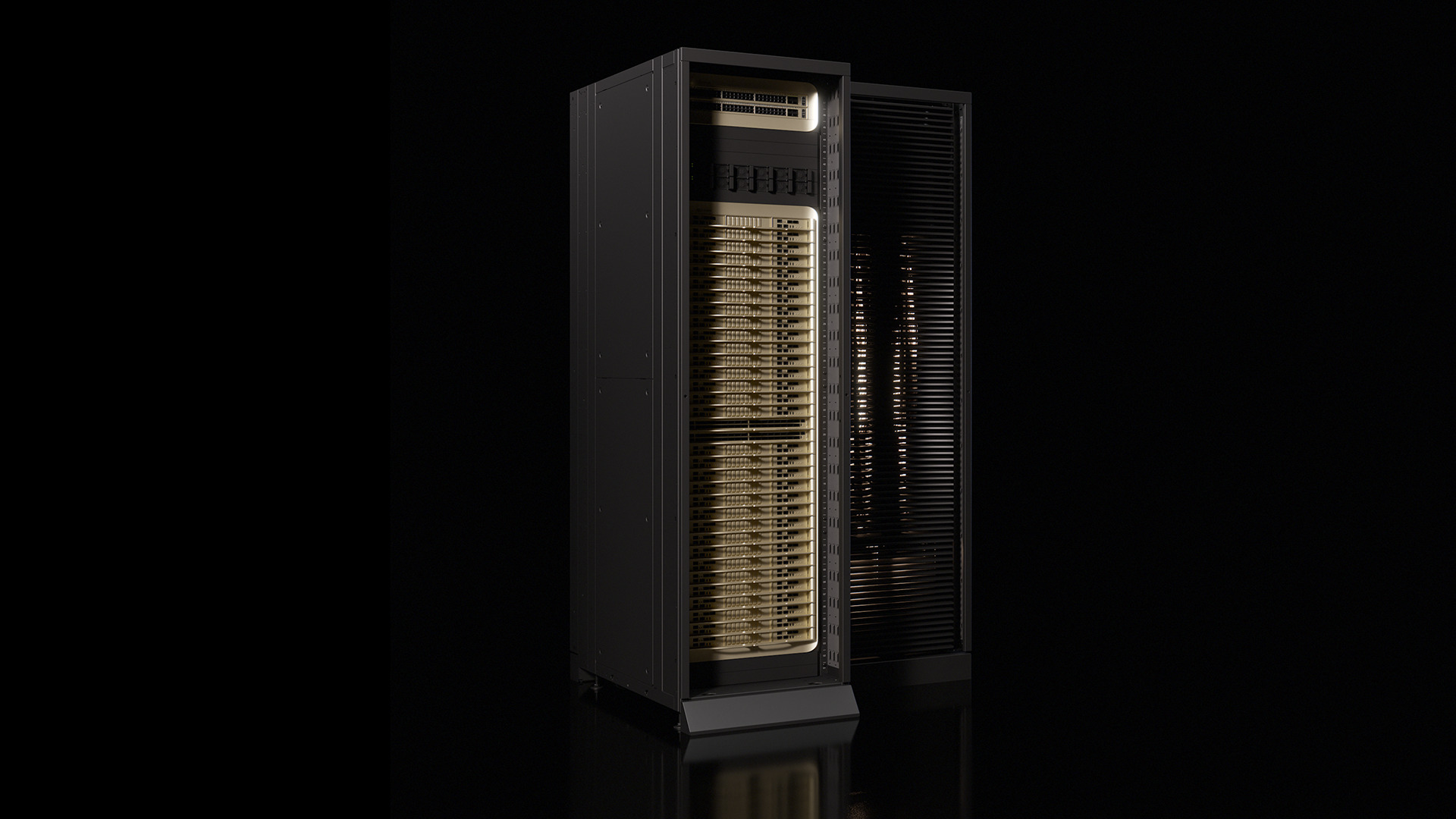
Nvidia Vera chips rarely make headlines when their revenues beat expectations, but they should. When Nvidia on Wednesday reported first-quarter revenue of US$81.62 billion, above analysts’ expectations of US$78.86 billion, and a second-quarter outlook of US$91 billion, well ahead of Wall Street’s estimate of US$86.84 billion, the numbers did what Nvidia numbers always do: blow away the room.
But CEO Jensen Huang’s conference call with analysts was more strategically interesting than the quarterly results. Huang told analysts that Nvidia’s new Vera central processors will give it access to a US$200 billion market, completely exceeding the US$1 trillion the company has already projected between 2025 and 2027 from its Blackwell and Rubin AI GPU lineups.
He expects Vera chip revenue to reach US$20 billion by the end of this fiscal year. “We expect (Vera) to be our second largest contributor to sales,” Huang said on a conference call.
It’s not a footnote. That’s the second front.
Vera Chip and Inference Pivot
The reason Nvidia needs a second front is simple. Because our biggest customers are building their own fronts. Together, Google, Amazon, and Microsoft are expected to spend more than $700 billion on AI infrastructure this year, a significant increase from about $400 billion in 2025, while also spending money on custom silicon to run their AI models. Intel and AMD also tout their CPUs as reliable means for inference workloads.
The story in the chip industry is shifting from who can train the biggest model to who can deliver that model cheapest and fastest. Inference is where Nvidia’s GPUs shine the most. While training large models remains Nvidia’s domain, custom chips like Google’s TPU product line and Amazon’s Trainium are increasingly claiming a role in inference that generates answers at scale in real time.
Nvidia’s answer is Vera. The chip, developed in part using technology from Groq, an inference startup licensed by Nvidia in a deal worth about $17 billion, is targeted at exactly this workload. The complete Vera Rubin platform, which combines Vera CPUs and Rubin GPUs, is expected to be available later this year.
Supply is already a constraint
Mr. Huang spoke candidly about supply issues. “My sense is that supply will be limited throughout Vera Rubin’s lifetime,” he said by phone. This is a clear admission for a product that Nvidia has positioned as a key growth pillar. To stay ahead of the disruption, Nvidia is spending heavily on its supply chain. The company revealed that supply commitments for the first quarter rose to US$119 billion from US$95.2 billion in the previous quarter, a significant increase reflecting both confidence in demand and concerns about a global memory chip shortage.
Nvidia also announced an $80 billion share buyback program and raised its quarterly cash dividend from 1 cent to 25 cents a share, moves that signal financial confidence even as Huang warns of tight supply.
Questions investors are asking
Despite the strong performance, Nvidia stock fell 1.6% in after-hours trading after the earnings call. Jacob Born, an analyst at eMarketer, captured the tone, saying, “NVIDIA has another win, but it’s basically priced in at this point as it continues to win quarter after quarter. The question remains whether it can convince investors that building AI is durable into 2027-2028, especially as the narrative shifts to inference workloads and competing silicon from Google, Amazon, AMD, and Intel.”
Huang pushed back with numbers of his own. He noted that a sub-segment of cloud customers focused on AI is growing, and while their spending is now roughly on par with hyperscalers, it is growing faster quarter-over-quarter. “We should grow faster than our super-large capital investments,” he said.
The Vera chip is at the center of that discussion. Whether the supply chain will cooperate is another matter entirely.
(Image source: Nvidia Newsroom)
SEE ALSO: Nvidia H200 China deal survived Trump-Xi summit, but not in the way everyone expected
Want to learn more about AI and big data from industry leaders? Check out the AI & Big Data Expos in Amsterdam, California, and London. This comprehensive event is part of TechEx and co-located with other major technology events. Click here for more information.
AI News is brought to you by TechForge Media. Learn about other upcoming enterprise technology events and webinars.

