



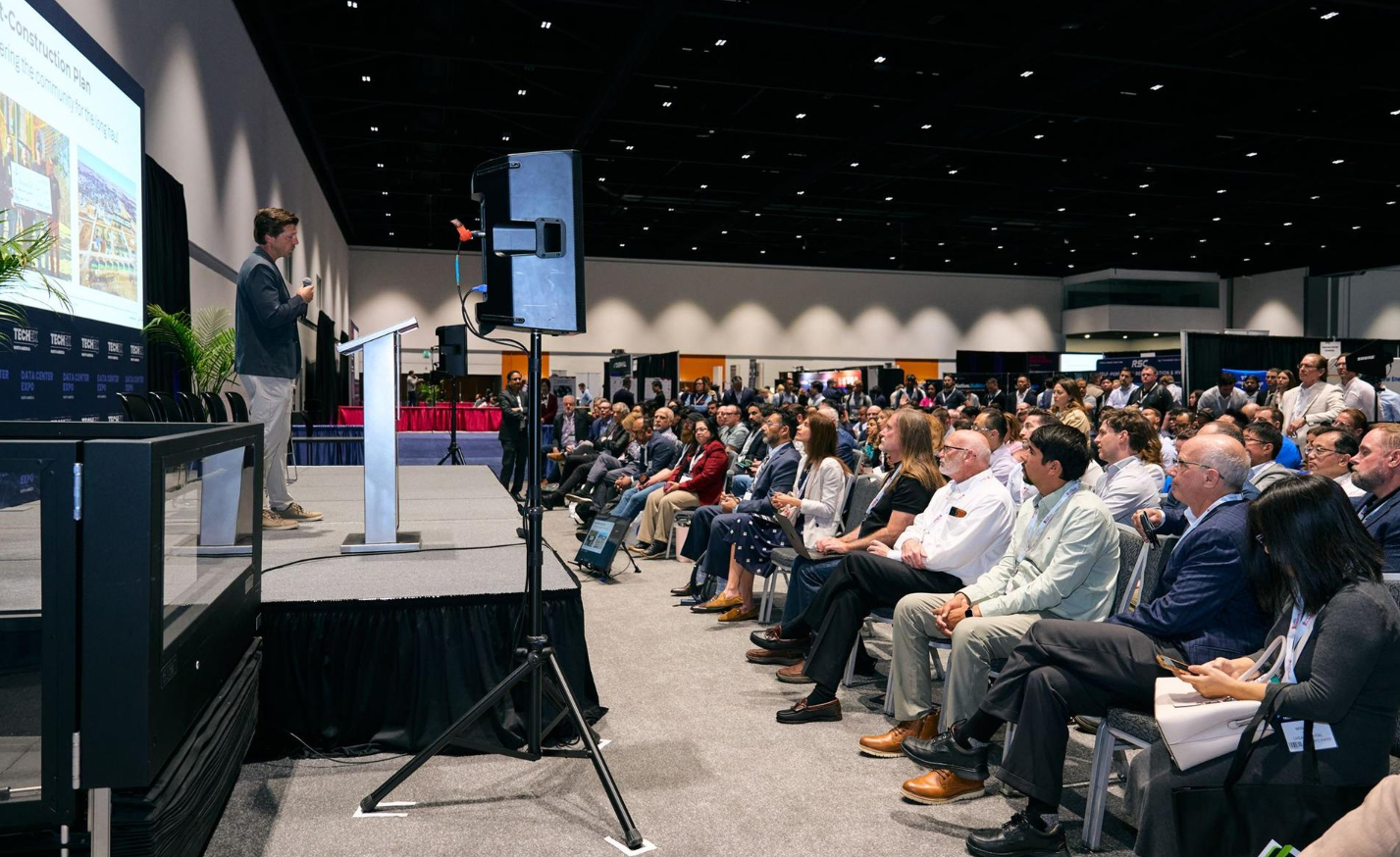
Day two of TechEx North America was a deeper, more critical look at AI in the enterprise, but with an optimistic streak. AI and big data programs began with reference to the so-called “AI graveyard”: AI projects that seemed to work well in pilots but would be useless in the real world. Despite the presence of negative terminology, multiple speakers and sessions mentioned how forward-thinking companies don’t have to experience a technology graveyard.
Various show tracks on the second day of the event delved deeper into the pervasive issues that may be impacting AI adoption. The Enterprise AI Implementation, ROI, and Adoption Track sessions took stalled pilots as a starting point and tried to find out the reasons behind projects stalling. There was plenty of sound advice for organizations, including sessions on focusing agent AI on specific business areas, building an agent-enabled data foundation (planning for internal success), and the reality that token-based AI is straining business finances.
At the infrastructure level, there were also deeper discussions about whether companies should buy or build physical infrastructure for AI projects and how best to generate lasting ROI for data and AI projects, given all the many influencing factors are properly considered.
In projects where AI deployment is stalled, the core issue may be symbolized by the concept of a “personal co-pilot.” This works well for one employee’s desk or individual workflow, but it doesn’t scale to an entire department, let alone an entire business. Many companies report that they have the budget to start such AI experiments at the single-user level, and the results are usually impressive. If the user is an executive, the efficiencies achieved by the individual tend to increase the level of excitement across the company, which should be considered a positive. However, many organizations face individual struggles and obstacles as they move from here to meaningful change across the business. Here you’ll find the fruits of the second day’s activities on the exhibition floor and on numerous stages throughout the venue. San Jose McEnery Convention Center.
cyber issues
Despite the use of terms like “stagnant” and “hard to scale,” speakers on the Cybersecurity and Cloud Expo stage cited the speed with which companies and organizations are deploying agent-based AI systems as the cause of the “velocity gap.” Successful adoption of AI will lead to rapid adoption. But security and governance issues arise when business units deploy generative AI faster than security teams can manage and ensure the safety of the enterprise.
Like the proverbial double-edged sword, AI is a transformative force that can improve both offense and defense in the cybersecurity field. In addition to the internal problems caused by unrestricted agents and large language models, attackers have an additional weapon in their arsenal: AI scanning tools that can identify potential exploits.
Additionally, the old theme of shadow IT, prevalent in roundtable discussions and keynotes, is now emerging in a new guise as shadow AI. For example, if a staff member places sensitive material in an unapproved tool, or if an approved AI system is poorly restricted and managed, the attack surface can grow without cybersecurity teams even realizing it’s happening. Therefore, data governance and system monitoring are becoming more intertwined than before. That was the message from both the cybersecurity elements of the show, as well as the cloud and big data elements.
For pure cybersecurity capabilities, zero trust has been presented as one answer to the rampage of AI outside the purview of cybersecurity teams, or the adoption of a “deny-by-default” position for both humans and machines. Identity proofs and privilege levels must also apply to services and agents. By doing so, automated workflows are subject to the same permissions model as every other element in your IT stack.
The second day of TechEx North America didn’t deny decision makers’ AI ambitions. The role of AI, and even agents, was an acknowledged fact among speakers, thought leaders, and delegates at the event. However, details and considerations were presented by representatives from a variety of industries and business sectors, each making a positive and insightful contribution. Each brought their concerns and enthusiasm to the table to further the discussion on AI implementation in 2026.
march of robots
And there was still great excitement in many areas of the conference floor. The show’s humanoid robots were the source of much enthusiasm (everyone seems to love the adorable androids!), but on a more practical note, the new physical AI trucks attracted some of the show’s biggest audiences. Multiple off-track participants cited software coding as the place where they first saw positive results from using large-scale language models in a professional setting. We also heard from many quarters that automated physics systems will be the next industry segment to benefit from concerted efforts on new models and their practical harnesses.
The AI models at the heart of the next generation of physical AI will likely not be LLMs (though they are useful when devices are designed to interact with humans), and as such models are developed and emerge from the research stage, the TechEx event series will be the first to introduce and present these models and how they can work feasibly in business situations.
New learning elements for the event
This year’s event welcomed pragmatic coding, with hands-on learning sessions where attendees created their own AI agent models, and lessons on how agents can self-improve from an interactive Google Colab instance. The TechEx Learning Hub also hosted workshops from Nvidia and the popular Google Hackathon, attended by learners of a wide range of abilities, from those needing an introduction to IDEs to those with already well-tuned software skills. Whether it’s executive decision makers getting lessons on best strategic practices or developers turning creative ideas into reality, this event is all about putting what you’ve learned into practice.
TechEx takes the cutting edge and distills it through a business lens. We are realistic yet forward-looking. Find out what’s next for TechEx in Amsterdam this September. Who knows how far we have come in four short months?
(Image source: TechEx event)

Want to learn more about AI and big data from industry leaders? Check out the AI & Big Data Expos in Amsterdam, California, and London. This comprehensive event is part of TechEx and co-located with other major technology events. Click here for more information.
AI News is brought to you by TechForge Media. Learn about other upcoming enterprise technology events and webinars.

