



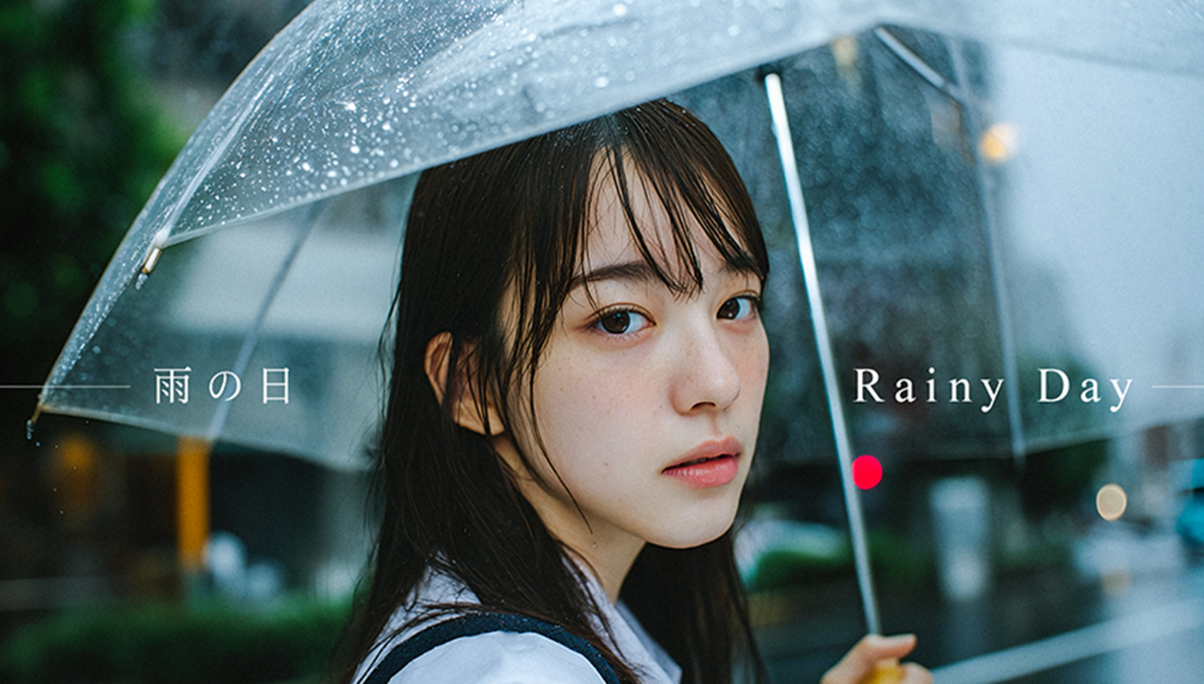
In 2025, as short video and digital art continue to grow, Chinese AI tool Kling AI is reshaping the content creation landscape. The AI video generation platform developed by Kuaishou’s in-house team is transforming the way creators work through technological advances and a wide range of applications.
The following screenshot in this article shows an award-winning video cover created using this platform in Kling AI’s own video creation competition.
3D spatiotemporal modeling with physical realism
Kling AI’s core competitiveness lies in its self-developed 3D spatio-temporal attention mechanism and diffusion transformer architecture. Unlike traditional AI video generation tools that rely on stitching still images, Kling AI employs a 3D VAE (variation autoencoder) framework to generate visuals that can simulate realistic motion trajectories and physical dynamics.
For example, for the opening ceremony of the 2025 Asian Winter Games, the tool was used to generate effects such as crystallization of athletes and detailed rendering of reindeer fur, achieving fine-grained visual precision and dynamic lighting effects. These technical capabilities make it possible to generate continuous and physically consistent motion in complex scenes, from falling flower petals to human movement.

A feature matrix that covers the entire process from creative idea to final production
Kling AI’s features are designed to align closely with the needs of creators. These form a complete loop of generation, editing, and optimization.
Multimodal generation on the platform supports three modes: text to video, image to video, and video continuation. If a user types “cyberpunk-style mechanical cat walking in neon rain,” it can generate a 1080P video in less than five seconds. When you upload a still image, AI automatically embeds background movement and character expressions to generate a dynamic 5-second clip.
For professional-level control, the platform offers features such as locking the first and last frame, directing camera movement, and lip-syncing your character. Directors can adjust lighting intensity, motion amplitude, and even change camera focus through text commands.
The AI editing toolbox integrates post-production features such as image enhancement, local repainting, and style transfer. For example, users can convert regular videos to ink painting style or restore noise problems in old footage with one click.

Technology upgrades drive creative engine evolution
In late September, Kling AI launched its latest 2.5 Turbo model with significantly upgraded text-to-video and image-to-video conversion capabilities. The overall performance of the new model showed improvements across multiple dimensions, including rapid compliance, behavioral performance, stylistic consistency, and aesthetic quality.
In particular, its multi-element editor allows users to add or replace elements within key video frames, enabling an interactive “change the story with a single sentence” experience.

What the future holds: Democratizing creativity with AI
As of November, Kling AI had more than 45 million users worldwide, according to the company. Kling AI is helping AI-powered creativity move from professional circles to the general public by reducing technology costs and increasing ease of use. Independent directors, marketing professionals, and casual short video enthusiasts can now express their creativity with a lower barrier to entry.
In the AI-driven shift in content creation, AI video generation platforms are more than just tools. It also acts as a bridge between imagination and reality. Combined with technological advancements and ecosystem developments, we may be witnessing the beginning of a new era in digital content creation.
related

