



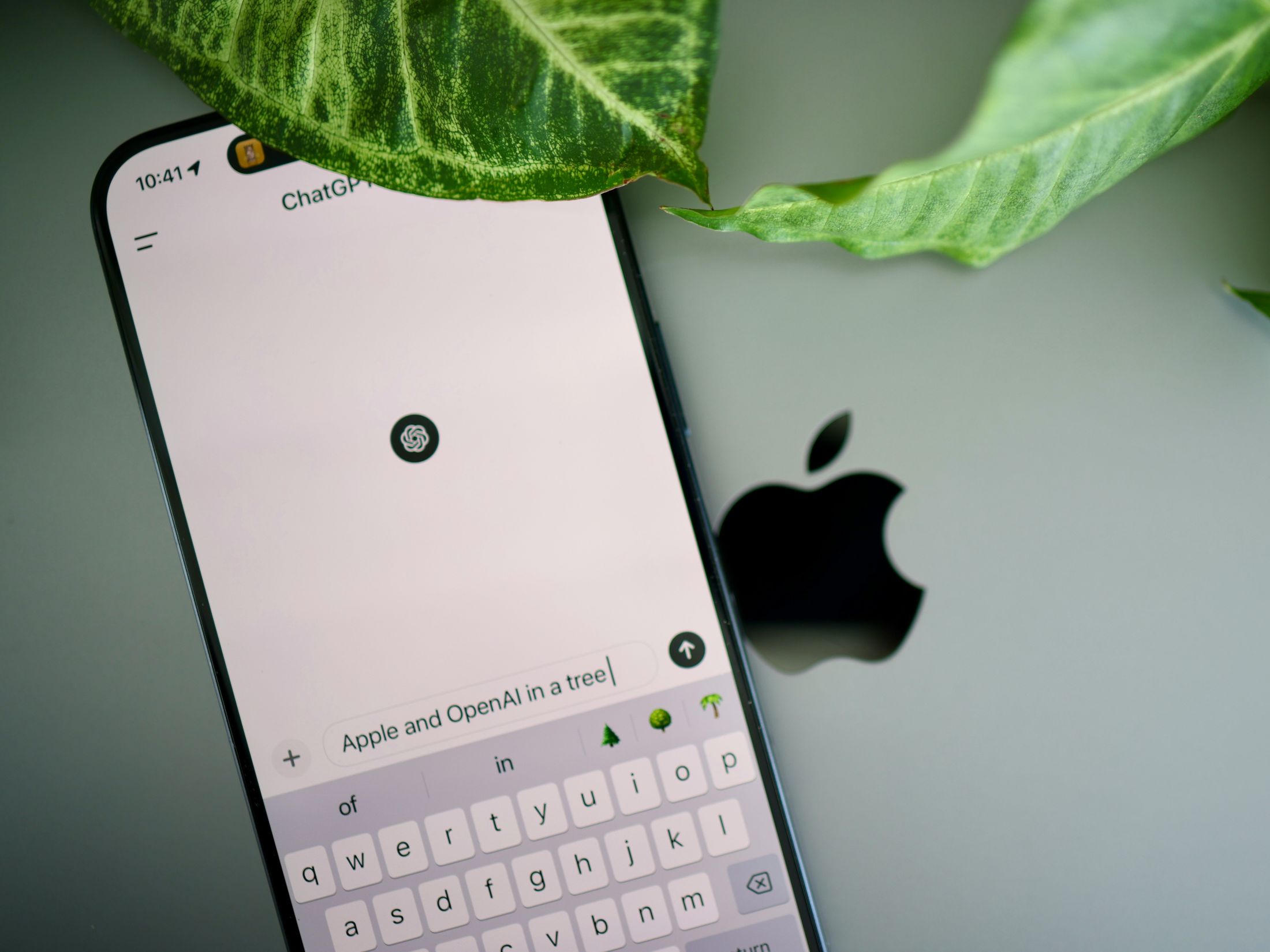
OpenAI is rolling out the Health feature within ChatGPT, giving users the option to connect Apple Health data and medical records to the chatbot. Logged-in users 18 and older can now access the Free, Go, Plus, and Pro levels on the web and on iOS.
Users link Apple Health and, if supported, records from U.S. hospital systems, One Medical, or Function Health. Once synced, ChatGPT can bring your medications, test results, recent visits, sleep data, and activity logs into every conversation in the app, rather than limiting context to a separate section.
OpenAI ran an early version of this idea with a small test group. That test required users to open a dedicated health area to get answers based on their data.
The company found that more than 70% of health-related conversations within its groups took place in a completely different location, during meal planning or unrelated symptom questions, rather than within a dedicated space created for that purpose.
That data led to this redesign. Rather than forcing users into a specific mode for contextual answers, ChatGPT now leverages connected health information across every conversation, as long as users give permission.
People planning to eat out may receive restaurant suggestions that take into account their recorded dietary restrictions. Ask about your weekend plans and you’ll likely get activity suggestions tailored to any recent injuries noted in your synced records.
The Health tab in the sidebar still exists, but its role has shifted to become a management hub where you can connect your accounts, see synced data and trends, view suggested prompts, return to past health-related chats, and more.
What early testers of ChatGPT’s health features reported
OpenAI has published a number of accounts from its early access group, the details of which are worth weighing against the company’s own framework of tools as support rather than diagnostics.
Blake, Technical Program Manager, said, “What helped me the most was converting my scattered medical history into something I could actually understand and explain. I have multiple overlapping issues, and ChatGPT helped me connect the parts into a clear timeline, explain medical terminology in plain English, and create summaries that I could share with physical therapists and trainers.”
Regarding the transition from disconnected records to usable patterns, Blake added, “Instead of just looking at disconnected diagnoses, imaging results, and surgical records, we can understand larger patterns. The information is more usable, and it’s given us better language to advocate for ourselves with providers and trainers.”
Portfolio manager Reweti cited longitudinal analysis as a differentiator from standard searches and one-time doctor visits.
“ChatGPT connects everything, so you can access existing labs and take the time to look at them. That’s a big advantage. It’s like having a research analyst. It allows you to be more proactive and take more ownership of your health journey.”
However, not all accounts were problem-free. Given the risks associated with exposing clinical data through a chatbot interface, it’s worth flagging your account. Shannon, a nurse, explained that through this tool she discovered an unexpected item in her chart.
“Working with Health really reinforced something I’ve believed for a while: One of the greatest strengths of AI is not to replace healthcare professionals, but to help patients better understand and navigate their health information,” Shannon explained.
“Finding unexpected chart items through healthcare really highlighted that for me. It wasn’t the AI that caused the problem. It helped us identify something that we could properly follow up with the healthcare provider.”
The difference between a tool that surfaces something for human follow-up and a tool that makes a clinical call is the line that OpenAI needs to keep in its products depending on the scale of usage.
Other testers focused less on clinical nuances and more on the practical work of reviewing the manual data the feature was intended to replace. Daniel, a consultant, connects multiple sources and finds that a unified view is more useful than separate chat sessions.
“It’s great for adjusting labs and translating them into a language I understand. Connecting Apple Health and MyChart gives me insights based on what’s going on in my life as a whole, beyond just chat interactions,” Daniel said.
Kathleen, a small business owner who lost her 10-year fitness routine due to work pressure, described a low-risk but specific use case where the model adjusts recommendations based on directly visible gaps in activity.
“When I say, ‘I need something to get me moving today,’ my health care sees that I haven’t exercised in the past seven days and suggests starting slowly, like walking or stretching. It helps me keep things manageable and get back on track in a reasonable way,” Kathleen explained.
Operations Manager Carlton previously exported a spreadsheet from Apple Health and manually uploaded it after each chat, but the new integration is designed to eliminate this workaround.
“Before Health, I was exporting a bunch of spreadsheets from Apple Health and importing them into ChatGPT. Now it feels much more streamlined. Being able to see years of my fitness journey in Health has helped me see things from a different perspective and from a bigger perspective,” Carlton said.
OpenAI runs health-related ChatGPT queries from more than 300 million people every week, covering everything from deciphering test results to preparing for a doctor’s appointment. If this number is accurate, it would put ChatGPT in a position that would take most digital health platforms years and significant marketing dollars to reach.
The company clearly positions Health as a support tool rather than a diagnostic tool, and tells users to check with their actual healthcare provider for important matters.
OpenAI’s AI model performance claims and how to test them
OpenAI attributes the feasibility of this feature in part to new models: GPT‑5.5 Instant, available to free users, and GPT‑5.6 Sol, reserved for paid tiers.
The company says GPT‑5.5 Instant advances in recognizing when emergency care is needed and accounting for uncertainty, and performed as well as OpenAI’s frontier thinking models at the time on the most demanding health assessments. GPT‑5.6 Sol is said to be the company’s strongest health model to date built for inference across multiple data points, including laboratory trends over time.
To verify these claims, OpenAI says it worked with hundreds of physicians to build health scenarios and rubrics that score answers on accuracy, safety, communication, situational awareness, completeness, and appropriate escalation to specialized care. The company reports that all GPT-5.6 models outperformed GPT-5.5 in HealthBench Professional, an internal assessment built for this purpose.
Graphs included in OpenAI’s announcement show that GPT‑5.6 Sol scores higher than GPT‑5.5 Instant and GPT‑4o across categories such as accuracy, communication, completeness, and following instructions, using physician-generated responses as a comparison baseline.
OpenAI says doctors specifically tested its Live Health product before launch to assess real-world performance and safety using connected data, a step beyond just benchmark scoring, but the company has not disclosed details of its testing methodology or results.
Health data processing and permissions architecture
According to the company, connected medical records and Apple Health data, and conversations based on them, will be excluded from underlying model training and ad targeting, regardless of a user’s broader ChatGPT training settings. Even conversations that don’t touch on health data follow the user’s individual training settings.
By default, access is permission gated. ChatGPT asks questions before using connected health data to personalize responses, but users can turn off prompts entirely by toggling to “Always Allow.” This setting is located in (Settings) > (Plugins) > (Health) and can be reverted at any time. When you disconnect a data source, it will be removed from OpenAI’s systems within 30 days, but any existing chat history that is already visible will remain until you manually delete the conversation.
Memory creation is also narrow in scope. Memories can be created from health conversations, but not directly from connected raw records or Apple Health data itself. Users who want to avoid memory creation completely can use ephemeral chat or disable memory in settings.
OpenAI also flags certain edge cases, such as actions that could expose health data through other connected plugins, such as sending a training plan built from Apple Health metrics to an execution partner. The company states that additional checks will be applied before such actions are taken, and for sensitive cases, ChatGPT may ask for explicit confirmation. OpenAI says it conducts red team exercises targeting these scenarios, but the results and failure rates of those tests have not been made public.
What about edge accuracy?
The real friction point is in the quality of the data. A drug can remain visible in a patient’s sync record for a long time even after the patient has stopped taking it, and OpenAI uses that very scenario to explain why sync data is not automatically refreshed. Its guidance to users is straightforward. Instead of trusting the sync to be accurate out of the box, flag changes directly in ChatGPT and check everything important against the original source.
Wearable and fitness apps have their own gaps in data. Because availability depends on whether each third-party app chooses to share through Apple Health. OpenAI notes that some proprietary scores from fitness apps may not transfer at all.
The relevant question is not whether ChatGPT can correctly summarize lab results in the demo, but whether the permission model, data deletion timeline, and escalation logic will work when a user’s synced records are three months old and the model is asked to reason about conflicting inputs.
OpenAI’s physician testing addresses some of those concerns. Administered assessments and incomplete data syncing from four different apps continue to distance users managing multiple chronic conditions.
If you’d like to try this feature out, it’s now available in the (Health) sidebar menu for eligible US users.
See also: OpenAI Presence sells engineered enterprise AI agents
Want to learn more about AI and big data from industry leaders? Check out the AI & Big Data Expos in Amsterdam, California, and London. This comprehensive event is part of TechEx and co-located with other major technology events such as Cyber Security & Cloud Expo. Click here for more information.
AI News is brought to you by TechForge Media. Learn about other upcoming enterprise technology events and webinars.

