



AI camaraderie is rapidly increasing, especially among minors. Nearly one-third of U.S. teens report relying on AI chatbots for emotional support.
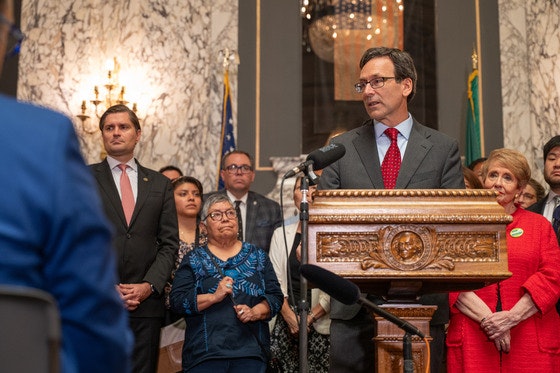
Washington state regulators are sounding the alarm on this trend after several high-profile cases of teenage suicides involving chatbots. Washington State Governor Bob Ferguson called on lawmakers to introduce legislation that would establish safeguards for chatbot companions, especially minors.
Senate Bill 5984 would require tools like ChatGPT to remind users that they are robots, not humans, at the beginning of a conversation and at least every three hours for the duration of the conversation. These rules also apply to minors, who are subject to additional protections. Chatbots will be prohibited from engaging in sexually explicit conversations with underage users and will be required to refer them to mental health services if they exhibit signs of self-harm, such as eating disorders.
Last week, Google and Character.AI settled a lawsuit alleging that their chatbot caused a mental health crisis in teenagers.
Character.AI public relations officer. The company said it is considering the Washington bill and is keen to work with regulators on AI guardrails. The company recently stopped allowing unlimited chatting with minors after a teenage boy became so attached to one of its chatbots that he took his own life.
“Our top priority is the safety and well-being of our users, including our young viewers,” a spokesperson said.
Another teen suicide case involving OpenAI’s ChatGPT is still in litigation. OpenAI and Google did not respond to KUOW’s requests for comment on Washington’s bill.
State Sen. Lisa Wellman, the bill’s sponsor, said there are “several real-world cases right now where chatbots have been implicated in child suicide.” “This is the visible part in terms of harm. There are other cases where children are emotionally devastated by AI. We don’t necessarily know everything about what’s going on, but we do know that AI can establish emotional dependence and provide information and guidance to children.”
Wellman said Washington state is working to coordinate AI regulatory approaches with other states such as California and Oregon. Last month, President Donald Trump signed an executive order seeking to preempt state regulation of AI as part of the federal government’s efforts to strengthen America’s competitiveness in frontier technologies. The legality of that order is subject to debate. Meanwhile, Washington is moving forward with various AI regulations in the upcoming Congress.
“We want to get ahead of any further damage or harm that may be caused by technologies that are on the market,” Wellman said.

