



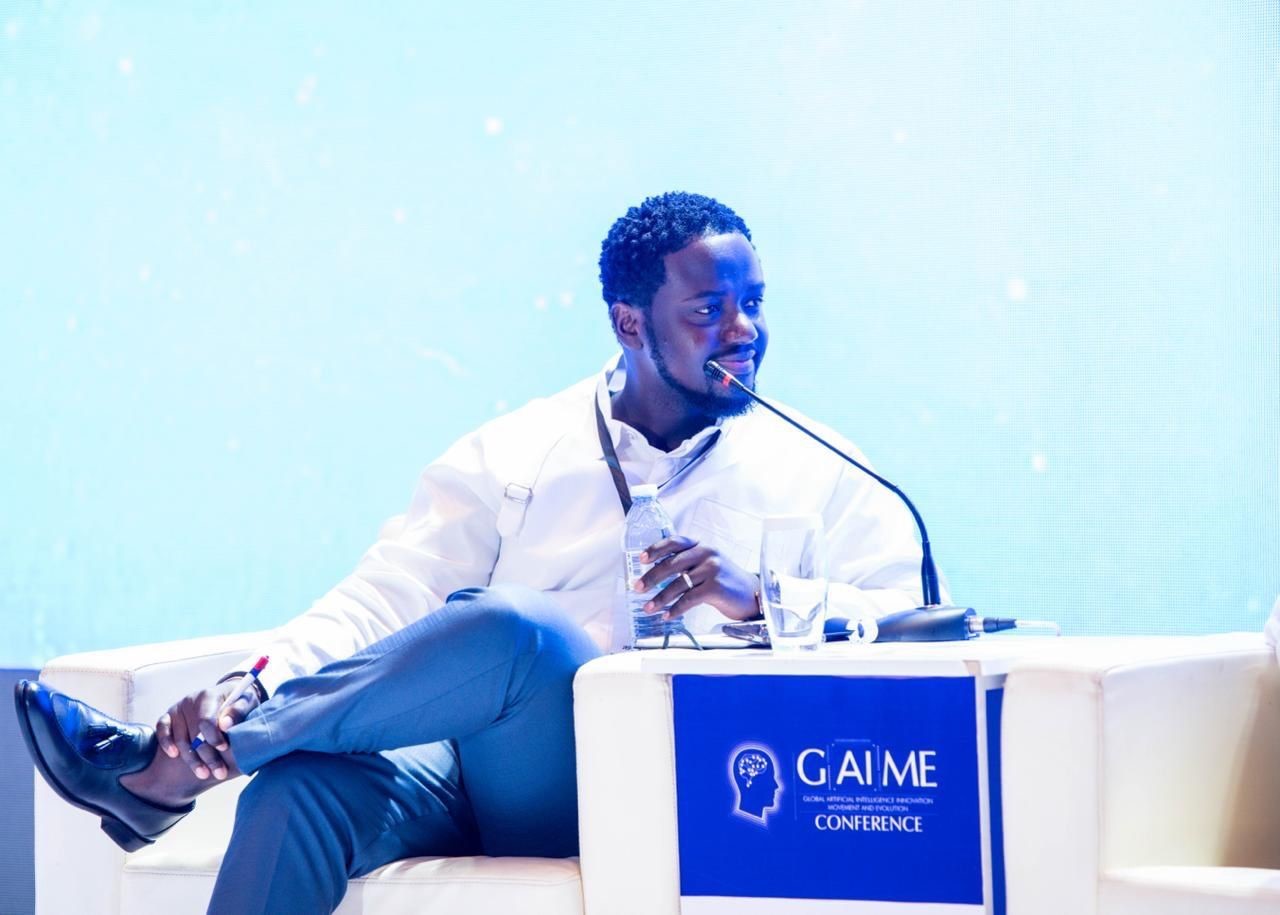
The 2025 Global AI Innovation Movement and Evolution (GAIME) conference in Kampala was full of possibilities. Leaders and innovators from around the world came together to ask the defining questions. “How can Africa shape its future in the age of artificial intelligence?”
Among the voices making up the discussion was Jeph Acheampong, founder of Blossom Academy, who moderated two high-impact sessions on “AI Strategies for Emerging Markets” and “Career Paths in AI,” and participated in a panel discussion on “Building an AI Team from the Ground Up.”
Mr. Achiampong’s contributions highlight his growing influence at the intersection of data, education, and workforce development across Africa. In his Lightning Talk, he outlined three pivotal changes that could help the continent become more resilient and seize the opportunities of the AI era.
Rethinking education for the age of intelligence
He started with education. This is a theme close to my work at Blossom Academy. The challenge, he argued, was not just to teach technology, but to teach thinking.
“AI is great at automating repetitive tasks,” he said. “We can no longer afford to force students to memorize concepts just to pass exams. Our educational institutions must develop problem solvers who can think critically and even challenge the insights generated by the illusions of AI.”
In his view, Africa’s future innovators must be creators, not just consumers of technology. Classrooms need to develop critical thinkers who can question, adapt, and improve AI tools without hiding in their shadow.
Cooperation over competition
Achiampong’s second call was for greater cooperation across Africa’s innovation ecosystem. He pointed out that while there are many passionate builders on the continent, many still operate in silos.
“Ecosystem builders, from civil society to the private sector to governments, often operate independently. There is a pride of ownership that can impede progress,” he said.
Instead of duplicating efforts or competing for the same limited resources, he proposed a model of regional cooperation, with joint investments in shared infrastructure such as data centers and renewable energy grids. These could address collective challenges such as high data costs and unstable power, he suggested.
“Imagine the scale and quality of AI solutions we could build for the continent if we pooled our resources regionally,” he said.
Data literacy for decision makers
Acheampong’s final point touched on the importance of digital literacy in leadership, especially in decision-making.
At Blossom Academy, about one-third of employer partners who take on data interns end up hiring data professionals for the first time, he said. Once they understand how analytics impacts their business results, they keep coming back for more.
“Democratizing data literacy among public sector leaders will reduce dependence on foreign contractors and accelerate the development of localized AI solutions,” he said.
Africa’s vision: “Understanding AI correctly”
During a subsequent panel discussion on “Building an AI team from scratch,” Acheampong was asked to imagine what would happen if Africa adopted AI correctly. His vision was one of transformation and inclusion.
With a projected global shortage of 85 million skilled workers by 2030, millions of Africans are working remotely to fill some of the gap on the continent. Governments make decisions based on reliable, real-time data. And blue-collar jobs, from plumbers to electricians, will be enhanced rather than replaced by technology.
He called on training providers to expand beyond traditional technology roles into sectors such as manufacturing, agriculture and energy, reducing Africa’s dependence on foreign expertise and unlocking the untapped potential of its workforce.
The question of readiness
GAIME There was a sense of urgency at the conference itself, but there was also an atmosphere of optimism. Uganda’s Minister of ICT and National Guidance, Dr. Chris Baryomunshi, gave this memorable analogy:
“The map of Africa is shaped like a question mark, which means it’s asking questions for all of us.”
For Jeph Acheampong, the question is one of preparation. Will Africa rise above this and define its own AI future, or will others define it for us?
Post views: 138
Learn more from Business & Financial Times
Subscribe to receive the latest posts by email.

