



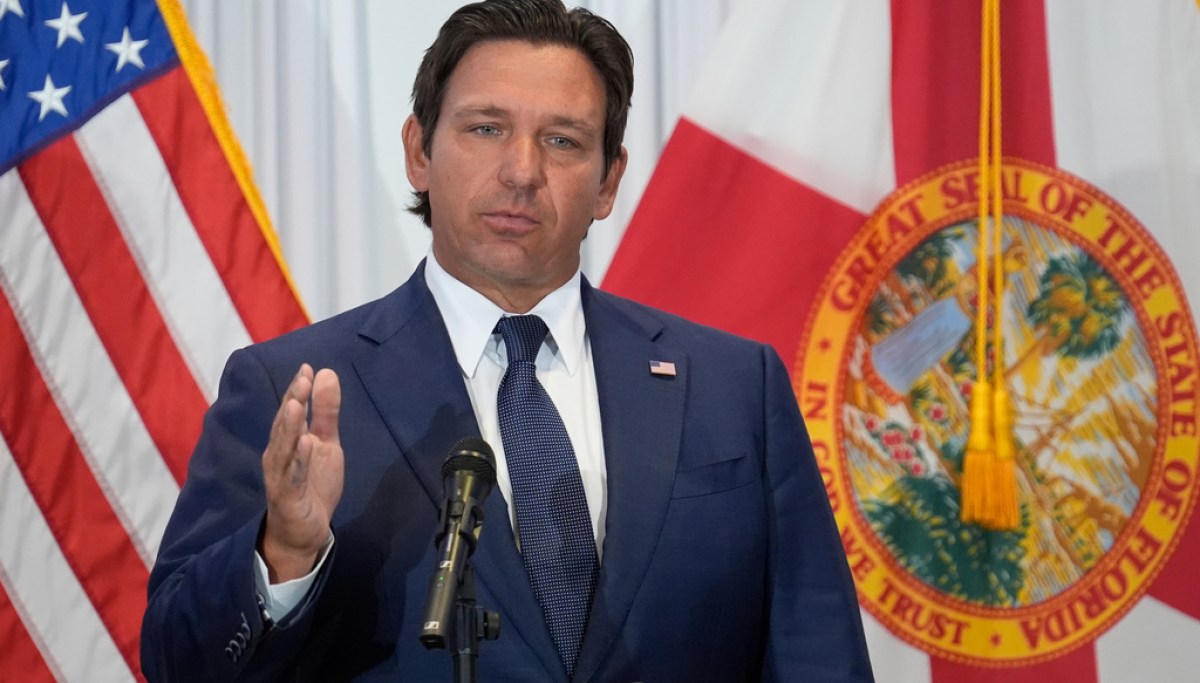
Gov. Ron DeSantis (R-Fla.) announced new legislative proposals Thursday to regulate artificial intelligence at the state level, ignoring President Donald Trump’s call for a 10-year federal moratorium on state AI laws.
DeSantis dubbed his proposal the “AI Bill of Rights” to protect states’ legislative control over rapidly advancing technology.
“I oppose stripping Florida of its ability to legislate in the people’s best interest. A 10-year AI moratorium would prohibit state regulation of AI. It would prevent Florida from enacting important protections for individuals, children, and families,” he wrote to X.
Some of the key elements addressed in this proposal include deepfake protections, especially for minors. Banning government use of Chinese AI tools such as DeepSeek. Name, Image, and Likeness Restrictions. Prohibition of AI-delivered therapy and mental health counseling. And parents have increased oversight of their children’s interactions with AI models.
DeSantis shared the story of a mother who lost her son to suicide because of an AI chatbot. AI models encouraging minors to commit suicide have been circulating repeatedly and are attracting the attention of lawmakers across the country.
The proposal also covers hyperscale AI data centers. The Republican governor’s plan would prohibit power companies from charging customers extra fees to support data center development. Additionally, taxpayer subsidies would not go to large tech companies that build or expand data centers in Florida.
The AI Bill of Rights will be submitted to the Florida Legislature, where the Legislature will decide how much of the governor’s proposal becomes law. The state’s next regular legislative session will be in session for 60 days and is expected to begin on January 13, 2026.
If approved, the proposal would create one of the strictest AI governance frameworks in the nation and put Florida at odds with the Trump administration.
President Trump wants to ban state regulation of AI over the next 10 years, allowing the US to compete with China in the AI race. The White House’s AI agenda suffered a setback this week when Congress voted to remove the AI moratorium from the annual defense bill.
House Majority Leader Steve Scalise (R-Louisiana) confirmed that the moratorium will not be included in the National Defense Authorization Act for fiscal year 2026. Instead, Congress is considering other options for this provision.
“We need to find a place to do it,” Scalise said Tuesday. “This is an important bill, but it’s a bill that we’re going to have to build another coalition around. And it would be great if we could add that, but it wasn’t the right place for this.”
Sen. Josh Hawley (R-Ark.) responded to Scalise’s comments about the lack of AI preemption in the NDAA by posting “Good for you” on X. “This is a terrible provision and should be banned.”
Senate Majority Leader John Thune (R-South Dakota) also poured cold water on the provision’s inclusion in the bill, telling the Washington Examiner that it is “controversial” and that “both sides are digging in some ways.”
Thune expresses doubts about White House push to pause AI
The 10-year grace period was removed from President Trump’s major tax and spending bill this summer, but Republican lawmakers are working to pass the provision elsewhere.
The White House is reportedly considering an executive order that would preempt state AI laws, rather than passing them through Congress, according to Axios. The idea was first floated in November.

