



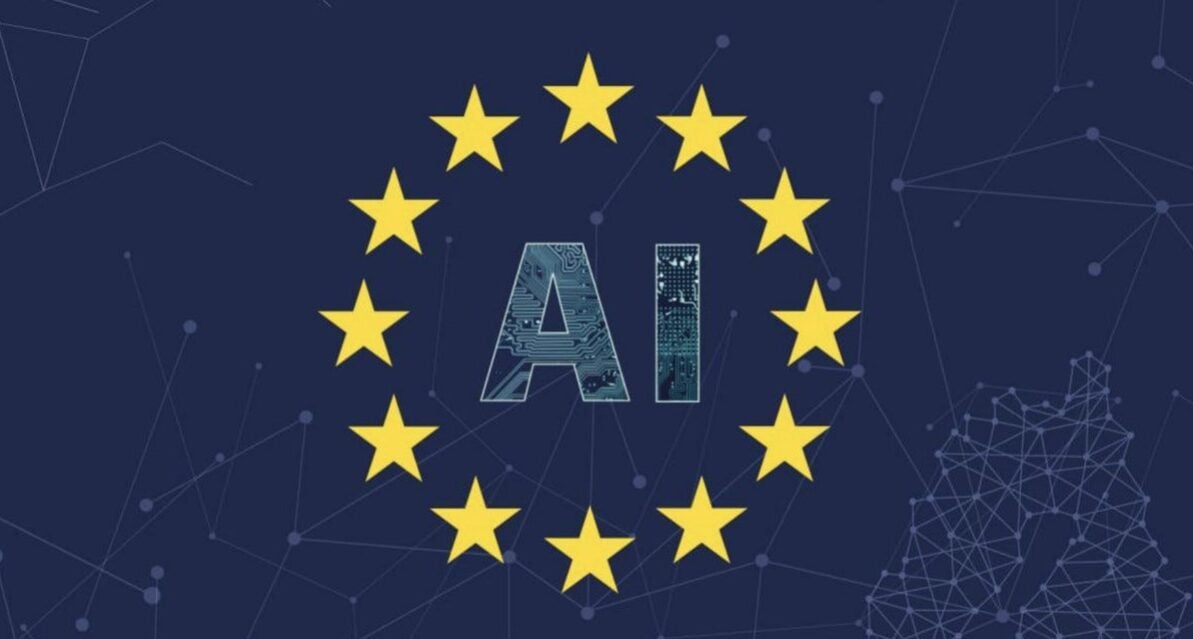
European Union officials have finalized a political agreement on AI legislation. This groundbreaking legislation is the first of its kind in the world. It aims to regulate artificial intelligence based on its potential to cause harm.

An agreement was reached after nearly 40 hours of intense negotiations. According to Reuters, the law establishes a comprehensive legal framework for the development and use of AI. Corresponds directly to powerful underlying models like ChatGPT.
How the groundbreaking AI law works
EU AI law operates on a risk-based pyramid. Applications deemed to pose an “unacceptable risk” may be banned entirely. This includes social scoring systems and certain types of predictive policing.
Strict obligations apply to the use of high-risk AI, such as in critical infrastructure and medical devices. These include rigorous risk assessments and high-quality datasets. Citizens will have the right to lodge complaints.
Most AI systems, such as spam filters, are considered minimal risk. We rarely face new constraints. The law creates specific rules for general purpose AI models and requires transparency regarding their training data.
Enforcement of new AI rules and global impact
The new rules have significant financial consequences if violated. Violation of the Prohibited Applications provision may result in a fine of up to 35 million euros. This is a number confirmed by The Associated Press.
The law is expected to set a global benchmark, similar to the EU’s GDPR data law. Companies outside the EU will need to comply if they want to access the region’s vast single market. This gives the regulation significant international impact.
Analysts have suggested that the law could spur trustworthy AI innovation within Europe. Global tech giants are also being forced to adapt their products. The final document is expected to be formally adopted in early 2024.
The EU AI Act establishes a new global standard for artificial intelligence regulation that balances innovation with fundamental rights and safety.
I wanted to know
What AI systems are prohibited under EU AI law?
The law prohibits AI systems that are considered a clear threat to security and rights. This includes biometric classification using sensitive features and untargeted scraping of facial images. It also prohibits social scoring by AI that manipulates government and human behavior.
How will the AI Act affect companies like OpenAI and Google?
Developers of powerful general-purpose AI models will face transparency requirements. A detailed overview of the content used to train the system must be provided. They must also implement cybersecurity measures and report their energy consumption.
When will the EU AI law become formal?
This political agreement is provisional, pending final legal checks and formal adoption. According to the European Parliament, the law will be fully applied 24 months after it comes into force, although some bans will be applied sooner.
What are the fines for violating the rules of the AI Act?
Fines are tiered depending on the nature of the violation and the size of the company. The most serious violations can result in fines of up to €35 million, or 7% of global annual turnover. For minor violations, the maximum fine is lower.
Why did the EU enact this law?
The EU aims to ensure that AI developed and used in Europe is safe and that fundamental rights are respected. The goal is to promote public trust and legal certainty in business. Officials want to make Europe a leader in human-centered AI governance.
trusted sources
European Parliament, European Commission, Reuters, Associated Press, Bloomberg.
iNews covers the latest and most influential stories across entertainment, business, sports, politics and technology, from breakthroughs in AI to major global developments. Stay up to date on the trends shaping our world. For news tips, editorial feedback or professional inquiries, please email us at:
(email protected).
For the latest news, follow us on Google News, Twitter, Facebook, Telegram and subscribe to our YouTube channel.

