



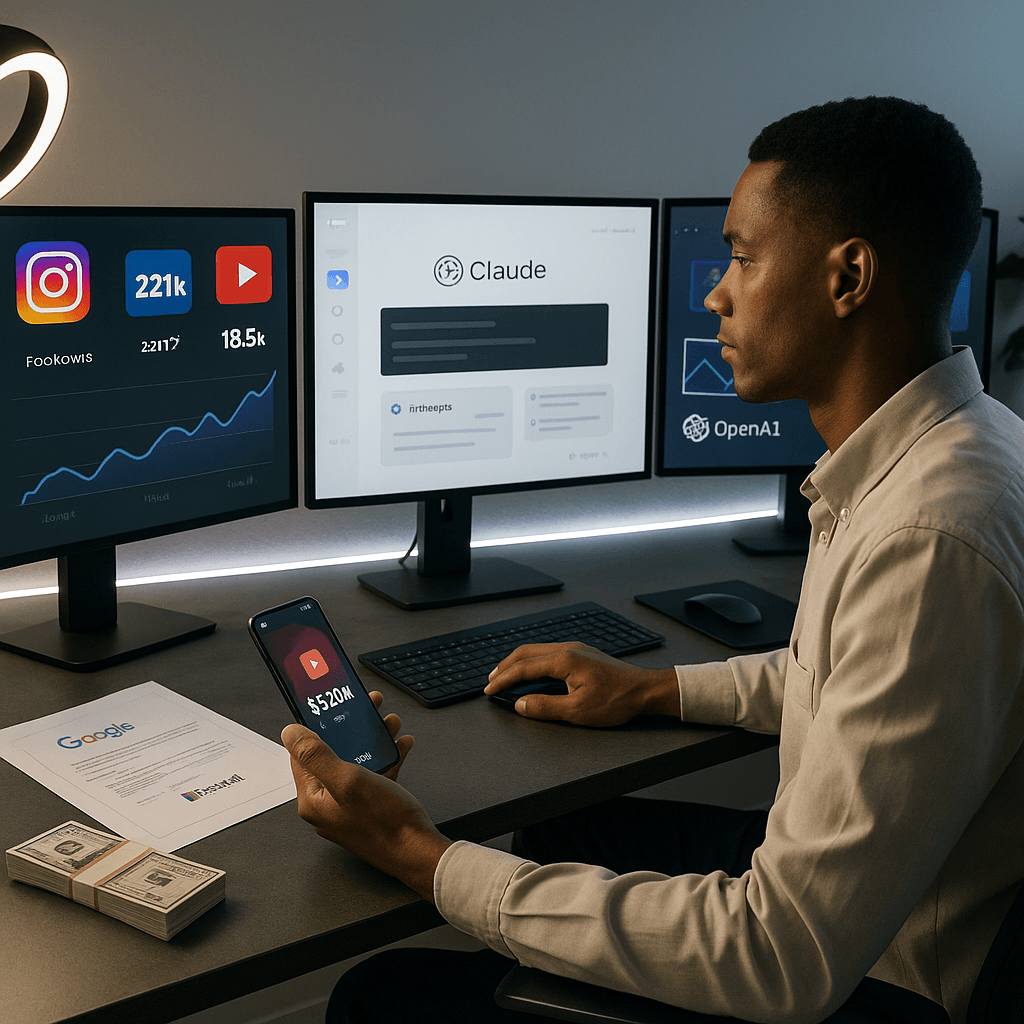
Google and Microsoft are spending billions on social media influencers to make AI look cool, with up to $600,000 being paid for the multi-month partnership, according to people familiar with the deal. This aggressive spending reveals how desperate Big Tech companies are to win over users in the AI war, even as some creators are walking away from six-figure salaries citing ethical concerns. Generative AI platforms pumped more than $1 billion into digital advertising last year alone, and the battleground has shifted to Instagram feeds, YouTube videos, and LinkedIn posts.
Google and Microsoft have just opened their wallets wide open for the AI influencer wars. The tech giant is paying content creators between $400,000 and $600,000 in multi-month partnerships to promote its AI tools, according to people familiar with the deal who spoke to CNBC. This is not a typo. It costs $500,000 to post about chatbots and coding assistants.
The spending growth extends far beyond the two tech giants. OpenAI, Anthropic, and Meta are all flooding social platforms with sponsored AI content, turning Instagram, YouTube, and even LinkedIn into promotional battlegrounds. Individual creators can earn up to $100,000 per post from venture capital and high-capitalization AI companies, said AJ Eckstein, founder and CEO of Creator Match, an agency that connects brands and influencers.
“What we’re seeing is a huge increase in creator spending from these AI brands,” Eckstein told CNBC. “Every month, we’re seeing much more interest from AI brands.” We want to build genuine connections with our users. His company has partnered with several AI-focused companies, including Anthropic, HeyGen, and Notion.
The numbers back up that enthusiasm. According to data from Sensor Tower, generative AI platforms spent more than $1 billion on digital advertising in the U.S. in 2025, an increase of 126% year over year. Digital ad spending by Google and Microsoft dedicated to promoting AI products increased by about 495% in January compared to the same month last year. increased digital ad spending more than 10x in 2025.

