



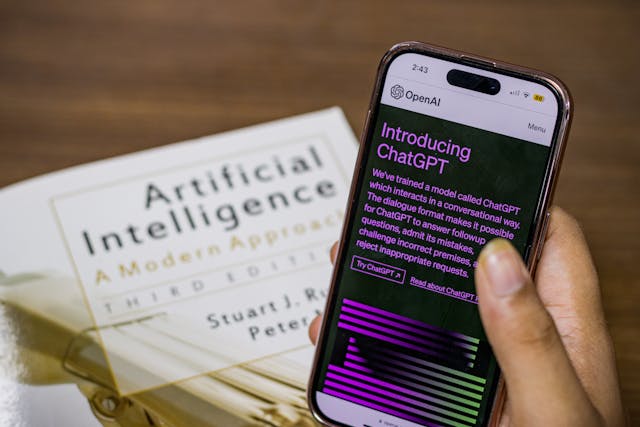
Most of the time, there are two opinions in the media. Those who panic, believing that AI will replace our workforce and enslave us, and those who tout AI opportunities at every opportunity (and often with huge profits). No matter how happy we are with our choices, AI can speed up the process of content creation and make it more focused. On the one hand, we have to deal with the choice of whether or not we can trust it.
Because AI is more than just a video editor that can make reality glossier. The paradigm of what is true and what is not is changing. In addition, high technology and marketing are also gaining attention. Over the past two years, several leading companies have moved AI-powered content creation from experimentation to production workflows.
Some examples to spice up the conversation
That “small local” digital media company, Buzzfeed? Which production generated more than $36 million in revenue in the first quarter of 2025 alone?This was one of the earliest companies to adopt AI to the public. The company integrated OpenAI models into its content management system (CMS) to generate quizzes, lists, and personalized content formats at scale.
They didn’t wait for the 2025 trend. The initiative began in 2023 and expanded to 2024. BuzzFeed framed this as an augmentation, rather than a replacement, for its editorial staff. Moreover, they are following up on the chosen course, as the report for Q1 2025 highlighted the expansion of high-margin revenues in directions such as programmatic advertising and affiliate commerce, not to mention AI developments this time.
Legacy media is not far behind. In February 2025, The New York Times introduced in-house AI tools to assist journalists with headline drafting, SEO frameworks, summaries, and investigative support. To be fair, these tools operate under “strict editorial constraints,” or at least that’s what they’re told. These tools are expressly prohibited from autonomous publication. Because, of course, we have a reputation to uphold. The truth lies somewhere between “you’d be a fool not to” and “you can’t trust them anymore.”
AI = distrust? What can we do?
The concept of trust is interesting. There’s a reason (I’m sure a psychologist can tell you) why written words are more reliable than spoken words. Media and news organizations must further establish greater trust by committing to honest journalism, political neutrality, and verification mechanisms. When you read something on Twitter (oh, sorry, X), don’t you want a link from a trusted source? You should. And what constitutes a reliable source? Identifiable authors, transparent methodologies, primary sources, institutional accountability… all of the above.
Let’s be honest, every medium may have its flaws, so you should check out the opposite perspective. But what happens when AI comes in? Just as we want to trust our eyes, we should be in a position to trust publishers. Believing in the ethics of editorial procedures and content creation. But can it be done?
In June 2025, the Chicago Sun-Times ran into trouble after hitting “send” on “Heat Index: A Guide to the Perfect Summer.” The newsletter included a list of 15 books to read over the summer. Here’s the kicker. Of the 15 books recommended, 10 were lies, or fabrications. After a long 16 hours, the “proud author” confessed that he had used an AI agent to generate the list.
It took a full 24 hours for Chicago Public Media to issue a correction and apology, and for all the pomp and circumstance to fall into place. However, it left a bad aftertaste.
So what can we say about visual content? Usually it is much more believable to people, especially to the untrained eye.
As recently as January 2026, the UK media regulator launched a formal investigation into Elon Musk-owned X. why? Concerns about the use of Grok AI tools to generate sexually explicit images by digitally removing clothing of women and children.
AI-generated content improves as you speak, so you trust it and pay for it. We, as users, have and will continue to have an obligation to check, double-check, double-check before disseminating, sharing, quoting, or gossiping about anything we see online. At least for the foreseeable future.

