



Dubai’s bold goal to attract 10,000 artificial intelligence companies by 2030 is evolving from vision to execution, marking a new phase in the emirate’s transformation into a global technology powerhouse.
As a follow-up to an earlier announcement that positioned the UAE as the ‘Startup Capital of the World’, recent developments in AI infrastructure, capital inflows and global partnerships demonstrate how this goal is being realized, potentially reshaping Dubai’s economic structure and strengthening its competitiveness in the global digital economy.
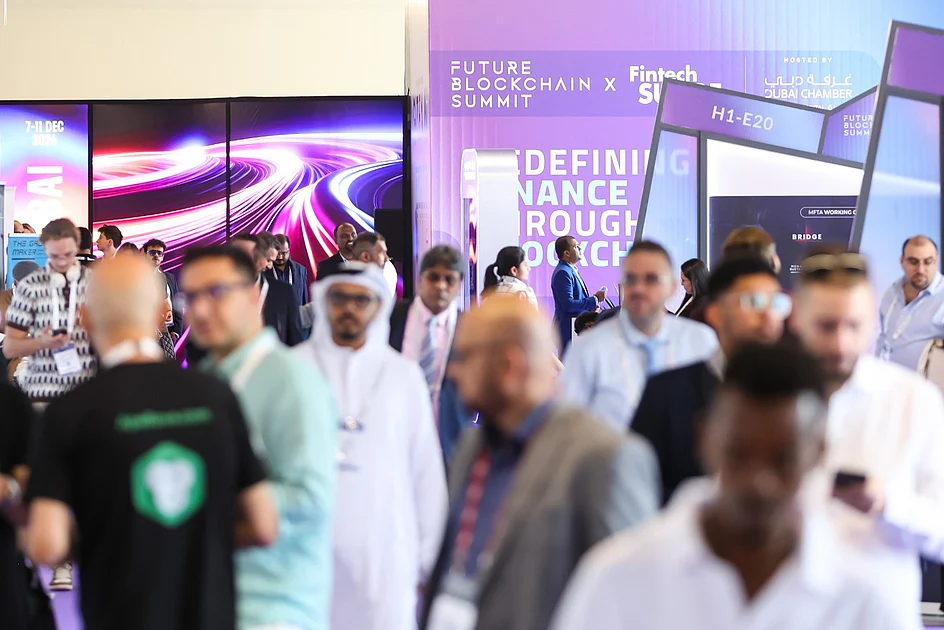
AI companies’ missions dominated the agenda at the latest edition of Expand North Star 2025, organized by Dubai World Trade Center and Dubai Digital Economy Chamber. What began in 2016 as a showcase of regional entrepreneurship has now become a flagship global summit. This year, 2,000 startups from 180 countries participated, 22% of which were focused on AI, and 40 unicorns and 1,200 investors managed approximately $1.1 trillion in assets. Over 500 domestic digital venture companies, including 116 UAE-founded companies, participated, highlighting the depth of Dubai’s local innovation base.
Omar Sultan Al Olama, Minister of State for Artificial Intelligence, Digital Economy and Remote Work Applications, said this goal reflects the UAE’s determination to lead the world in cutting-edge technology. “Dubai’s goal of attracting 10,000 AI companies over the next five years is not a dream. This is a commitment to building the world’s most dynamic and future-ready digital economy,” he said. “We already host over 1,500 pure-play AI companies, the most in the region. But this is just the beginning. Our strategy is to engage creators and producers of technology, not just users. That’s how we stay competitive and shape tomorrow’s industry.”
The plan is in line with the national initiative Emirates: Startup Capital of the World, which aims to create 30,000 jobs by 2030 and foster at least 10 new unicorns by 2031.
Al Olama said the focus on AI will be a “catalyst for new sectors, new jobs and new opportunities”, adding that Dubai’s active regulatory environment and infrastructure investments give it a global first-mover advantage.
That confidence is backed up by rapid progress in the field.
In mid-October, Microsoft announced a strategic partnership to enable local data processing for Microsoft 365 Copilot in the UAE. This is part of a $545 million (Dh2 billion) data center partnership with telecom operator du. Meanwhile, G42’s ‘Stargate’ AI data center campus in Abu Dhabi, a 5 GW mega-project involving OpenAI and Nvidia, will significantly expand the country’s computing capacity and support Dubai’s AI ecosystem. Investment in such infrastructure is essential to attracting developers, startups, and global companies looking to localize their AI operations in the region.
The introduction of AI in the UAE is accelerating. According to a recent IDC survey, approximately 42% of UAE companies are actively leveraging AI in their operations, with nearly two-thirds saying the pace of adoption has increased over the past two years. The UAE’s AI market will be valued at approximately $3.5 billion in 2023 and is expected to grow at an annual rate of 44% until 2030.
PwC estimates that AI could contribute approximately 14 percent, or $96 billion, to the UAE’s GDP by the end of the decade. The Oxford Insights Government AI Readiness Index ranks the UAE first in the Arab world and in the top 15 globally, reflecting strong institutional readiness and investment focus.
Analysts view the 10,000 AI corporate strategy as an effort to institutionalize innovation at scale. By fostering a dense ecosystem of developers, enablers and startups, Dubai is positioning itself not only as a consumer market but also as a global producer of AI technologies. Venture funding trends are reinforcing this momentum. The UAE raised $678 million in startup investments in Q1 2025, an increase of 57% year-on-year, with AI and fintech accounting for almost half of that total.
Sajitkumar PK, a Dubai-based business analyst, said this goal is not just a technology milestone but an economic diversification strategy. “AI is now the most transformative force shaping global competitiveness,” he said. “Dubai’s ability to anchor 10,000 AI companies will help shift the economy from asset-driven growth to intelligence-driven growth. It will attract global talent, create exportable digital products, and enhance the UAE’s role as a bridge between East and West in frontier innovation.”
He added that the AI push complements Dubai’s long-standing success as a logistics, trade and financial hub. “This is the next big leap for Dubai. From being a commercial hub to a recognition hub. This is a natural evolution of Dubai’s growth model,” he said.
Still, the path forward requires deeper structural capabilities. Attracting and scaling thousands of high-impact AI companies requires not just capital, but also specialized talent, regulatory clarity, and robust data frameworks.
Gender disparity in entrepreneurship in the region remains an issue, with women-led startups accounting for only 1.2% of venture funding in Mena in the first quarter of 2025. Experts emphasize that inclusive innovation and global partnerships are essential to achieving long-term sustainability.
Analysts estimate that if Dubai achieves its goals, the contribution of AI-driven industries to the emirate’s digital economy could rise from around 15% currently to more than 20% of GDP by 2030, which would be a decisive step in establishing the country’s growth model for the future. However, if concrete results are not achieved, there is a risk that the emirate will turn into a high-profile test bed without a deep understanding of local values.
So far, the signs are promising. Coordinated infrastructure investments, forward-looking policies and growing investor confidence are moving Dubai’s 10,000 AI company strategies from ambition to execution. Minister Al Olama said, “AI is the new foundation for economic competitiveness, and Dubai aims to become its global headquarters.”


