



SAP is urging organizations in Australia and New Zealand to rethink their approach to AI, data and application landscapes, indicating a shift from future speculation to real-world implementation.
The event, held at Centerpiece on August 7th, brought together over 700 participants and over 70 speakers to explore strategies to embed AI throughout the core business capabilities.
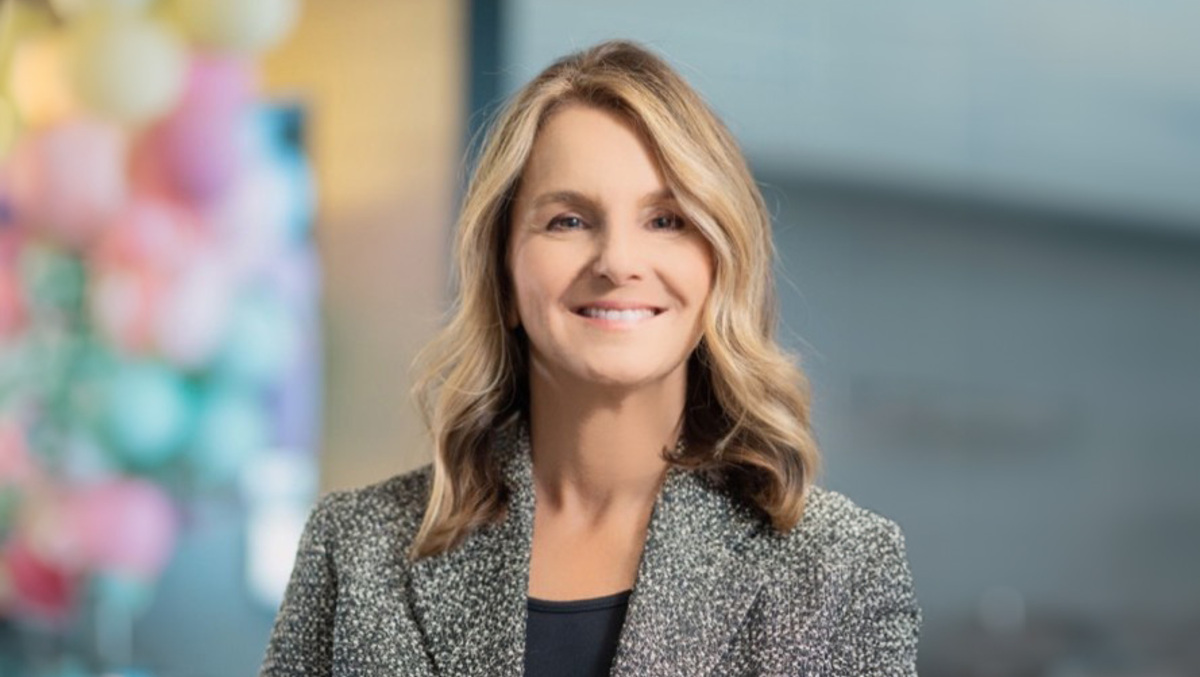
Angela Colantuono, managing director and president of SAP Australia and New Zealand, highlighted the urgency towards agility and productivity amid continuing disruption.
“Asciency is no longer an option, and productivity is Australia’s front page news,” says Colantuono.
“The Australian government will be working with business leaders on productivity challenges over the coming weeks.”
She also highlights SAP’s investment in sovereign cloud capabilities and Canberra’s Center for Excellence, highlighting the company’s commitment to local innovation.
“Our applications manage the heartbeat of the local businesses that SAP supports 92% of the ASX 200,” she said. “And of course, SAP Business AI is embedded directly in our suite.”
Colantuono highlighted the importance of a robust data infrastructure to unlock the true possibilities of AI. “There’s not enough people talking about how to do AI while everyone is talking about AI,” she said. “I know that you can’t unlock AI without modifying the data landscape.”
At the event, SAP announced the top five AI use cases currently being adopted by customers in Australia and New Zealand, based on customer data between May 2024 and May 2025.
Automated Expense Generation with Receipt Images Automatic Invoice Processing Cost Verification and Compliance Checks Real-time Alert Sales Demand Forecast Analytics Enhances
“My conversations with CEOs are increasingly clear that they are trying to embed AI into some of the most basic parts of the business,” Colantuono said.
“These applications will help Australian organizations make faster, smarter decisions, reduce risk and unlock new values. But to fully realize the possibilities of AI, they need to invest as much in people as technology.”
SAP’s commitment to responsible AI was echoed by Dr. Catriona Wallace, founder of the responsible Metaverse Alliance.
“AI is the number one existential risk we face today, but only a small portion of Australian organizations have the capacity to use it responsibly,” she said.
“If we want to promote innovation, productivity and public trust in AI, we must move beyond our ambitions and move towards action.”
Stefan de Barse, president of SAP Business Suite, used his keynote to explain the “flywheel” concept of SAP. Here, applications, data and AI have been unified, improving corporate value.
“The flywheel is about apps, data and AI coming together to deliver more value to all of our customers and partners,” he said. “It starts with apps that run end-to-end business processes. These apps also provide valuable data.”
That data forms the basis of SAP’s business data cloud and works with Databricks to enable real-time integration of business systems and AI-powered decisions.
“We spend 80% of our time managing this vulnerable balance between data and apps,” says De Barse. “This is only 20% of the time being invested in value generation.”
He argued that in the AI era, this disconnection was unsustainable. “It’s very important for AI to provide exponential values that the end-to-end business process context is relevant to the data,” he said.
De Barse, a demonstration of SAP’s AI Co-Pilot Joule, walked the audience through scenarios where finance, operations, procurement, HR and sales teams use shared data and embedded AI to work together to resolve rising inventory, backorders, and liquidity gaps.
Lion, a leading Australian and New Zealand beverage company, was cited as an example of SAP’s AI capabilities. After adopting SAP’s business technology platform and clean-core ERP model, Lion accelerated the order-to-cache cycle and developed the AI-powered beer recommended app “Joey.”
“We are pleased to announce that Ramkarianasdharam, Director of Group Technology and Digital Transformation at Lion, said: “SAP’s AI capabilities were a game changer about how we think, operate and grow.”
In higher education, La Trobe University was the first to perform live in the ANZ region along with SAP S/4Hana Cloud Public Edition as part of the growth of SAP Journey.
This transformation rationalizes university operations across finance, logistics, real estate and procurement, while laying the foundation for future AI-driven insights.
“This transformation is a huge step forward in the way we operate,” said Shainal Kavar, chief information officer at La Trobe University.
“It sets it up to embrace innovation and unlock the possibilities of AI over the next few years.”
In addition to showing customers’ success stories, SAP announced its return to the SAP Intrepid Women AI Tour in January 2026.
The four-day research programme is built on the momentum of the 2025 edition and will support senior female leaders in advances in AI literacy and leadership.
“Less than 15% of senior AI executives today are women,” Colantuono said. “Last year’s programme proved its impact is extraordinary when it comes to bringing together female leaders and building AI literacy and sharing experiences.”
“This is what we believe is the future of business suites,” he said. “And we want to embark on this business suite journey with you all.”

